
Meta has officially entered the frontier AI race with Muse Wonder, its newest model for long-running agents, complex coding and computer use. Released on October 12, 2026, Muse Wonder arrives less than a month after Anthropic launched Claude Opus 5.5 and OpenAI introduced GPT-6.1 Sol, creating one of the most interesting three-way AI comparisons of 2026.
The three models are targeting a similar problem: AI should no longer simply answer questions. It should be able to understand complex information, work across software, use tools, write and debug code, analyze documents and continue multi-step tasks with less human supervision.
But they take noticeably different approaches.
Claude Opus 5.5 currently has the highest independent maximum-effort intelligence score of the three. GPT-6.1 Sol provides the strongest price-to-performance proposition, costing half as much per token as Muse Wonder and Opus 5.5. Muse Wonder, meanwhile, is particularly interesting for long-running personal and professional agents, coding, memory and multimodal input because it can directly process text, images, PDFs, audio and video.
There is therefore no universal winner. The correct choice depends on whether you care most about maximum intelligence, cost, software engineering, business automation, multimodal understanding, persistent agent behaviour or deployment economics.
Muse Wonder vs Claude Opus 5.5 vs GPT-6.1 Sol: Quick Comparison
| Feature | Meta Muse Wonder | Claude Opus 5.5 | GPT-6.1 Sol |
|---|---|---|---|
| Company | Meta | Anthropic | OpenAI |
| Release Date | October 12, 2026 | September 22, 2026 | September 29, 2026 |
| Main Positioning | Personal/professional agents, long-running coding, computer use | Agentic coding and knowledge work | Near-Astra intelligence at lower cost |
| Context Window | 1,048,576 tokens | 1M tokens | 1,050,000 tokens |
| Max Output | Not officially published by Meta | 128K; 300K Batch beta | 128K |
| Input Price | $4/M tokens | $4/M tokens | $2/M tokens |
| Output Price | $20/M tokens | $20/M tokens | $10/M tokens |
| Cached Input | $0.20/M | $0.20/M | $0.10/M |
| Input Modalities | Text, image, video, audio, PDF | Text, images | Text, images |
| Output | Text | Text | Text |
| Reasoning | Minimal through Max | Adaptive, always on | Low through Max |
| Knowledge Cutoff | Not publicly specified | June 2026 | April 30, 2026 |
| Independent Intelligence Index, Max | 52 | 58 | 52 |
| API Access | Meta Model API, preview | Claude API + major clouds | OpenAI API |
| Consumer/Product Access | Muse Code; Muse integration coming | Claude | ChatGPT Work & Codex |
| Best Overall Strength | Multimodal agents + long-running work | Maximum intelligence + coding/knowledge work | Price-performance + broad agent tooling |
Meta officially lists Muse Wonder with a 1,048,576-token context window and support for text, image, video, audio and PDF inputs. Claude Opus 5.5 offers a 1M context window and 128K normal output, while GPT-6.1 Sol provides a 1.05M context window and 128K maximum output.
The Short Answer: Which AI Model Is Best?
If your priority is maximum raw intelligence and complex professional work, Claude Opus 5.5 currently has the strongest overall evidence. Artificial Analysis scores Opus 5.5 at 58 on its Intelligence Index at maximum effort, compared with 52 for Muse Wonder and 52 for GPT-6.1 Sol.
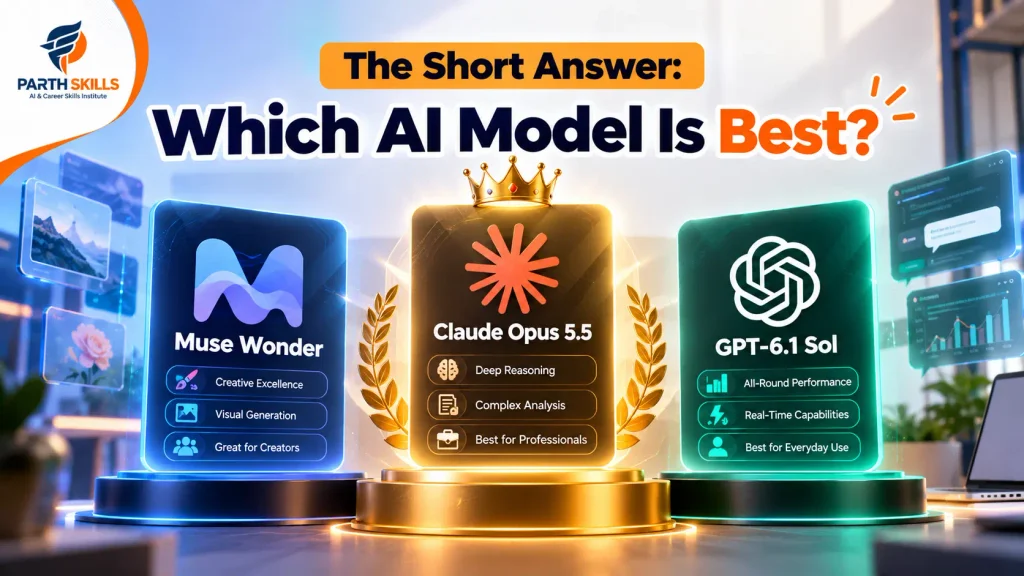
If your priority is price-to-performance, GPT-6.1 Sol is difficult to ignore. It costs $2 per million input tokens and $10 per million output tokens, exactly half the standard token price of Muse Wonder and Claude Opus 5.5. OpenAI designed it specifically to approach GPT-6 Astra-level capability while dramatically reducing inference cost.
If your priority is multimodal agents, long-running workflows and handling audio or video directly, Muse Wonder offers something the other two do not currently match at the model-input level. Meta’s API documentation supports text, images, PDFs, video and audio as inputs, combined with tool calling, search grounding, computer use and reasoning.
The more useful conclusion is therefore:
| Requirement | Best Candidate |
|---|---|
| Highest independent intelligence | Claude Opus 5.5 |
| Best API price-to-performance | GPT-6.1 Sol |
| Best native multimodal input | Muse Wonder |
| Complex knowledge work | Claude Opus 5.5 |
| Long-running software work | Claude Opus 5.5 / Muse Wonder |
| Repository-scale coding | Muse Wonder |
| Terminal coding | Claude Opus 5.5 |
| Low-cost production agents | GPT-6.1 Sol |
| Audio/video understanding inside one model | Muse Wonder |
| Persistent personal-agent direction | Muse Wonder |
| Large-context document work | All three |
| Production API maturity | Claude Opus 5.5 / GPT-6.1 Sol |
Important: Muse Wonder and Muse Wonder Full Are Not the Same Model
This distinction is essential because many early comparisons are mixing the two models.
Meta launched Muse Wonder and the more capable Muse Wonder Full at the same time. Standard Muse Wonder is available through the Meta Model API and Muse Code, while Wonder Full is currently restricted to paid Muse Code subscriptions.
Muse Wonder Full is available on Meta’s Power Usage plan at $50 per month and Maximum Usage plan at $200 per month. Meta does not currently provide a normal per-token API for Wonder Full.
That matters because Wonder Full scores considerably higher on several benchmark tables.
For example, the independent Artificial Analysis Intelligence Index puts:
| Model | Intelligence Index |
|---|---|
| Claude Opus 5.5 Max | 58 |
| Muse Wonder Full Max | 56 |
| Muse Wonder Max | 52 |
| GPT-6.1 Sol Max | 52 |
Therefore, an article saying “Muse Wonder scores 56” without specifying Wonder Full is misleading. The standard API-accessible Muse Wonder currently scores 52 on that independent evaluation.
This article compares standard Muse Wonder with Claude Opus 5.5 and GPT-6.1 Sol because those three can be compared more meaningfully as models available to developers.
Is “ChatGPT 6.1 Sol” the Correct Name?
Technically, no.
The official model name is GPT-6.1 Sol.
People may search Google for “ChatGPT 6.1 Sol,” but GPT-6.1 Sol is an OpenAI model rather than the default model behind ordinary ChatGPT conversations.
OpenAI says GPT-6.1 Sol is currently available through the OpenAI API and to eligible Plus, Pro, Business, Enterprise and Edu users in ChatGPT Work and Codex. OpenAI specifically stated at launch that GPT-6.1 Sol was not yet available in regular Chat.
For SEO, it therefore makes sense to cover both “GPT-6.1 Sol” and “ChatGPT 6.1 Sol,” while using the technically correct model name throughout the article.
What Is Meta Muse Wonder?
Muse Wonder is Meta’s new frontier model for what the company calls personal and professional agents.
Meta designed it around four major capabilities: complex coding across large repositories, long-running agents, advanced computer use and persistent context through what Meta calls Active Memory and Active Focus.
Instead of treating an AI interaction as a sequence of isolated questions, Meta wants Muse-powered agents to retain important information and continue pursuing a goal across more complex tasks.
What Is Active Memory?
Meta describes Active Memory as the ability to retain important context across conversations and retrieve the relevant details when they become useful later.
This direction is particularly important for personal AI agents.
An ordinary assistant may need you to repeatedly explain your preferences, previous decisions and constraints. An agent with useful long-term memory can potentially remember which information matters and use it during future tasks.
For example, a travel-planning agent could remember preferred airlines, budget limits and dietary requirements while planning future trips.
A business agent might remember a company’s internal workflows, previous decisions and project context.
Memory itself is not new to AI products, but Meta is positioning Active Memory as a model-level capability central to Muse Wonder’s agent architecture.
What Is Active Focus?
Active Focus is Meta’s term for maintaining progress when a task becomes difficult.
Instead of abandoning a workflow after encountering an error, Muse Wonder is designed to try alternative approaches, work through blockers, adapt when new information appears and ask for clarification when necessary.
This matters because real work rarely follows a perfect sequence.
A coding agent may write a patch, run the test suite, discover three failures, investigate each failure, revise the implementation and test again.
An ordinary chatbot can assist with individual steps.
A capable autonomous agent needs to maintain the goal through the entire loop.
Muse Wonder Is Meta’s Major Return to the Frontier AI Race
Meta describes Muse Wonder and Wonder Full as its most capable models yet. They were trained at Meta’s gigawatt-scale Prometheus data centre and are part of the company’s broader push toward what it calls personal superintelligence.
This is strategically important because Meta was previously associated strongly with the Llama family and open-weight AI.
Muse Wonder represents a different product direction. Standard Wonder is accessed through Meta’s hosted API, while Wonder Full remains tied to Muse Code subscriptions. Independent evaluators currently classify Muse Wonder as closed rather than an open-weight release.
Meta says Muse Wonder will also begin powering experiences inside the broader Muse product, starting with subscribers.
If you want background on Meta’s broader agent strategy before Wonder, see our previous Meta Muse AI Agent guide.
What Is Claude Opus 5.5?
Claude Opus 5.5 is Anthropic’s flagship model for long-running agentic coding and complex knowledge work.
Released on September 22, 2026, it provides a 1-million-token context window, up to 128K output tokens under normal API usage and up to 300K output tokens through Anthropic’s Batch API beta.
The model uses adaptive thinking that is always enabled. Its default reasoning effort is medium, but developers can increase or decrease the effort depending on the complexity and economics of a task.
Anthropic prices Opus 5.5 at $4 per million input tokens and $20 per million output tokens, with cached input at $0.20 per million.
That makes its base token pricing identical to Muse Wonder.
Claude Opus 5.5 Is Particularly Strong on Long AI Work
Anthropic built Opus 5.5 around sustained professional workflows rather than short chatbot exchanges.
One early tester allowed the model to work across six software repositories for more than 18 hours unattended, while another reported reducing a complex task from 38 prompts across four days to 11 prompts over three hours.
Anthropic also reported an example in which Opus 5.5 completed a 680,000-line code migration in less than a day. In another internal experiment, the model successfully improved load time without changing application behaviour in 39 of 40 attempts.
These are vendor-selected examples rather than neutral benchmarks, but they demonstrate what Anthropic is optimizing the model for: sustained engineering and professional work with fewer interruptions.
What Is GPT-6.1 Sol?
GPT-6.1 Sol is OpenAI’s September 2026 upgrade to GPT-6 Sol.
Its goal is straightforward: provide capability close to GPT-6 Astra while making frontier-level AI practical for workloads where Astra’s $10/$50 token pricing would be too expensive.
GPT-6.1 Sol costs $2 per million input tokens, $0.10 per million cached input tokens and $10 per million output tokens. GPT-6 Astra costs $10/$50, meaning GPT-6.1 Sol’s standard input and output rates are only one-fifth of Astra’s.
The model supports a 1,050,000-token context window, 128K maximum output and reasoning levels from low through max. Its published knowledge cutoff is April 30, 2026.
OpenAI positions GPT-6.1 Sol primarily around complex coding, professional work, computer use and AI agents.
Independent Benchmarks: The Most Important Comparison
Vendor benchmark charts are useful, but Google, Anthropic, Meta and OpenAI naturally choose evaluations that showcase their own products.
For a more neutral comparison, Artificial Analysis currently provides one of the most useful cross-model evaluation sets.
At maximum reasoning effort:
| Artificial Analysis Benchmark | Muse Wonder | Claude Opus 5.5 | GPT-6.1 Sol |
|---|---|---|---|
| Intelligence Index | 52 | 58 | 52 |
| AA-Briefcase v1.1 | 1,659 | 1,807 | 1,557 |
| GDPval-AA v2.1 | 1,770 | 1,866 | 1,592 |
| AutomationBench-AA | 68% | 70% | 65% |
| Terminal-Bench 4.0 | 52% | 60% | 56% |
| SciCode | 60% | 67% | 54% |
| Humanity’s Last Exam | 50% | 61% | 53% |
| GDP.pdf | 31% | 26% | 31% |
| CritPt | 28% | 32% | 32% |
| AA-Omniscience | 25 | 46 | 42 |
| AA-LCR v1.1 | 81% | 85% | 83% |
On this independent evaluation set, Claude Opus 5.5 is the strongest overall model of the three at maximum effort. It leads the composite Intelligence Index and most of the individual tests.
That does not mean Opus wins every real-world workload.
Muse Wonder performs particularly well on professional-document and agent tests, while GPT-6.1 Sol’s biggest advantage appears once cost is included.
Muse Wonder vs GPT-6.1 Sol: Same Intelligence Score, Very Different Economics
Artificial Analysis currently gives both Muse Wonder Max and GPT-6.1 Sol Max an Intelligence Index of 52.
The economics, however, are dramatically different.
| Metric | Muse Wonder Max | GPT-6.1 Sol Max |
|---|---|---|
| Intelligence Index | 52 | 52 |
| Input Price / 1M | $4 | $2 |
| Output Price / 1M | $20 | $10 |
| Cached Input / 1M | $0.20 | $0.10 |
| Average AA Cost per Task | $4.52 | $0.72 |
| Context | ~1.05M | ~1.05M |
In Artificial Analysis’s testing, GPT-6.1 Sol Max cost approximately $0.72 per Intelligence Index task, compared with approximately $4.52 for Muse Wonder Max. That is not simply a 2× difference because Muse Wonder also used substantially more tokens during the evaluation.
This gives GPT-6.1 Sol a major advantage for developers running high-volume agents.
A model that is 5% better but six times more expensive may not be economically attractive for every workflow.
Claude Opus 5.5 vs GPT-6.1 Sol: Intelligence vs Value
This is perhaps the clearest comparison of the three.
Claude Opus 5.5 Max scores 58 on the Artificial Analysis Intelligence Index, compared with 52 for GPT-6.1 Sol Max.
However, GPT-6.1 Sol costs half as much per standard input and output token.
| Metric | Claude Opus 5.5 | GPT-6.1 Sol |
|---|---|---|
| Input / 1M Tokens | $4 | $2 |
| Output / 1M Tokens | $20 | $10 |
| Cached Input / 1M | $0.20 | $0.10 |
| AA Intelligence Index Max | 58 | 52 |
| AA Cost per Max Task | $5.98 | $0.72 |
| Context | 1M | 1.05M |
Independent testing therefore gives Opus the intelligence advantage and GPT-6.1 Sol the economic advantage.
The decision becomes workload-dependent.
For an extremely difficult problem where one correct answer is worth thousands of dollars, the additional intelligence of Opus may easily justify the extra cost.
For an agent processing tens of thousands of ordinary business tasks every day, Sol’s economics become much more attractive.
Muse Wonder vs Claude Opus 5.5: Same Price, Different Strengths
This is arguably the most direct commercial comparison.
Both models cost:
$4 per million input tokens
$20 per million output tokens
$0.20 per million cached input tokens
They also both provide roughly million-token context windows.
Because pricing is identical, the choice depends much more heavily on capability.
Independent Artificial Analysis testing gives Claude Opus 5.5 a 58 Intelligence Index versus 52 for Muse Wonder.
Opus leads Wonder on Terminal-Bench, SciCode, Humanity’s Last Exam, general knowledge and overall professional-work metrics. Wonder performs particularly well on GDP.pdf and remains competitive on agentic business tasks.
However, Muse Wonder has one clear technical advantage: input modality breadth.
Opus 5.5 accepts text and images.
Muse Wonder accepts text, images, PDFs, audio and video.
For applications that need direct multimodal understanding rather than separate transcription or video-processing systems, that can materially simplify the architecture.
What Meta’s Own Benchmarks Show
Meta’s published evaluation table provides another useful perspective, although it must be treated as a vendor benchmark.
Meta compared Muse Wonder and Wonder Full against Claude Opus 5.5, GPT-6 Astra and Claude Fable 5.1 across agentic work, coding, memory, computer use and professional tasks.
For standard Muse Wonder versus Claude Opus 5.5:
| Meta-Published Benchmark | Muse Wonder | Claude Opus 5.5 |
|---|---|---|
| Personal Superintelligence Index | 54.3 | 55.2 |
| Harvey LAB-AA | 10.0 | 4.2 |
| Vals Finance Agent v2 | 56.6 | 58.6 |
| HealthBench Pro | 60.5 | 65.6 |
| AutomationBench-AA | 39.1 | 41.2 |
| GDP.pdf | 30.8 | 30.6 |
| JobBench | 70.5 | 75.4 |
| OSWorld 2.1 partial | 72.6 | 81.8 |
| MemoryBench | 85.6 | 81.5 |
| Terminal-Bench 4.0-AA | 52.0 | 59.6 |
| DeepSWE 1.1 | 78.8 | 74.2 |
| SWE-Marathon | 53.1 | 46.3 |
| ProgramBench | 50.0 | 70.5 |
| Artificial Analysis Index | 52 | 58 |
The pattern is extremely interesting.
Muse Wonder leads strongly on long-horizon repository engineering, memory and legal-agent work, while Opus 5.5 performs better on terminal coding, computer use, health, general professional tasks and programming from scratch.
This suggests the models are not simply different versions of the same architecture.
They appear optimized for somewhat different types of work.
Muse Wonder Full Changes the Comparison
Muse Wonder Full is significantly more competitive with Opus 5.5.
Meta reports Wonder Full at 79.0 on DeepSWE, 57.5 on SWE-Marathon, 45.4 on AutomationBench-AA and 13.1 on Harvey LAB-AA. It also receives a 56 on the Artificial Analysis Intelligence Index.
However, Opus 5.5 still scores higher at 58 on the independent Intelligence Index and leads Wonder Full on important evaluations including Terminal-Bench, ProgramBench and OSWorld in Meta’s own table.
The practical limitation is availability.
Wonder Full is not currently available through the pay-as-you-go Meta Model API. Developers must access it through the $50 or $200 Muse Code subscription tiers.
That makes standard Muse Wonder the more relevant model for API-based business deployments today.
Which AI Is Best for Coding?
There is no universal coding winner because coding benchmarks measure different things.
Repository-Scale Coding: Muse Wonder
Meta reports Muse Wonder at 78.8% on DeepSWE 1.1, ahead of Claude Opus 5.5 at 74.2% in its evaluation. Wonder Full reaches 79.0%.
DeepSWE focuses on longer software-engineering work in real codebases.
This aligns closely with Meta’s stated design goal: allowing Wonder to change and verify code across many files while maintaining context over a large project.
Long-Horizon Engineering: Muse Wonder
SWE-Marathon produces another strong Muse result.
Meta reports 53.1 for standard Wonder and 57.5 for Wonder Full, compared with 46.3 for Opus 5.5.
This makes the Wonder family particularly interesting for coding tasks where the model needs to keep working over a long period rather than produce a single function.
Terminal Coding: Claude Opus 5.5
Claude Opus 5.5 performs better on Terminal-Bench.
Artificial Analysis currently reports:
Claude Opus 5.5: 60%
GPT-6.1 Sol: 56%
Muse Wonder: 52%.
Anthropic separately reports a 66.4% Terminal-Bench 4.0 score under its own evaluation configuration. Cross-vendor setups differ, so these scores should not be mixed directly with independent numbers.
From-Scratch Programming: Claude Opus 5.5
Meta’s own ProgramBench table gives Opus 5.5 70.5, compared with 50.0 for standard Muse Wonder and 59.0 for Wonder Full.
So if you ask “Which AI is best for coding?” the answer depends on the type of coding.
For long, repository-wide work, Muse Wonder deserves serious consideration.
For broader agentic and terminal coding, Claude Opus 5.5 currently has stronger overall evidence.
For high-volume coding agents where cost is crucial, GPT-6.1 Sol offers an unusually attractive balance.
GPT-6.1 Sol Is Extremely Competitive for Coding Cost
OpenAI reports that GPT-6.1 Sol reaches 75.2% on DeepSWE 1.1 at high reasoning effort, slightly above GPT-6 Astra’s 74.1% published score while costing far less per task.
Again, this number comes from OpenAI’s evaluation rather than the same harness used in Meta’s table, so it should not be used to claim that Sol directly beats Wonder’s 78.8.
What it does show is that GPT-6.1 Sol can perform frontier-level software work at a relatively low price.
For startups running hundreds or thousands of coding-agent tasks, that difference could matter more than a few benchmark points.
Which AI Is Best for AI Agents?
All three models are clearly moving toward agentic AI.
The differences are primarily philosophical and architectural.
Muse Wonder emphasizes Active Memory, Active Focus, multi-agent delegation and long-running execution.
Claude Opus 5.5 emphasizes long-running professional agents, efficient subagent delegation, computer use and secure autonomous work.
GPT-6.1 Sol emphasizes cost-efficient agents with built-in access to OpenAI tools including web search, file search, code execution, hosted shell, computer use, MCP and structured outputs.
For maximum agent intelligence, Opus currently has the strongest independent evidence.
For personal-agent architecture and multimodal context, Wonder has the most unusual design.
For production economics and tool-rich developer infrastructure, GPT-6.1 Sol may be the most practical.
Which AI Is Best for Computer Use?
Computer-use AI can visually understand and operate software interfaces rather than interacting only through APIs.
Meta explicitly designed Wonder for browsers, desktop applications and mobile apps. Its documentation describes computer use as one of the model’s core capabilities.
However, Meta’s own OSWorld 2.1 partial-credit results currently give Claude Opus 5.5 81.8, compared with 78.4 for Wonder Full and 72.6 for standard Wonder.
GPT-6.1 Sol is also extremely strong in computer use. OpenAI reports 71.4% on the OSWorld 2.0 offline set at max reasoning, only 2.1 points behind GPT-6 Astra in OpenAI’s evaluation while costing approximately one-seventh as much per task.
Because Meta and OpenAI report different OSWorld versions and configurations, those numbers should not be treated as a direct Sol-versus-Wonder ranking.
Which Model Is Best for Knowledge Work?
Claude Opus 5.5 currently has the strongest overall case.
Artificial Analysis gives it 1,866 Elo on GDPval-AA v2.1, compared with 1,770 for Muse Wonder and 1,592 for GPT-6.1 Sol at the tested maximum settings.

GDPval-AA evaluates work resembling professional tasks across many occupations.
Anthropic’s own launch evaluation similarly reports 1,846 Elo for Opus 5.5, ahead of its comparison models. Anthropic notes that it performs particularly strongly in areas such as research, financial analysis and document-heavy professional work.
For consulting, financial research, legal analysis, strategy and other high-value knowledge work where output quality matters more than raw inference cost, Opus 5.5 appears particularly strong.
Which Model Is Best for PDFs and Large Documents?
All three models have approximately million-token context windows, so each can process unusually large amounts of information.
GPT-6.1 Sol performs particularly well on GDP.pdf, an evaluation involving complex professional PDFs containing tables, charts, diagrams and fine-print information. OpenAI reports that Sol approached Astra’s performance while costing much less.
Independent Artificial Analysis currently gives both Muse Wonder and GPT-6.1 Sol 31% on GDP.pdf, while Opus 5.5 scores 26% in that particular evaluation.
That does not mean Opus is generally worse at documents; its broader GDPval professional-work result remains substantially higher.
It demonstrates why a single benchmark should never be used to decide which frontier AI model is “best.”
Which Model Has the Best Context Window?
In practical terms, all three are now in the same class.
GPT-6.1 Sol supports 1,050,000 tokens.
Muse Wonder supports 1,048,576 tokens.
Claude Opus 5.5 supports 1,000,000 tokens.
The difference between 1,000,000 and 1,050,000 is unlikely to matter for most real applications.
The more important question is how effectively a model uses information distributed across that context.
Artificial Analysis’s AA-LCR long-context result currently gives:
Claude Opus 5.5: 85%
GPT-6.1 Sol: 83%
Muse Wonder: 81%.
This is one reason why context-window size alone is becoming a weak marketing metric.
A million-token context is only valuable if the model can find, connect and reason about the correct information inside it.
Muse Wonder Has the Broadest Native Input Support
This is one of the clearest technical differences.
Muse Wonder supports:
Text, images, PDFs, audio and video as native inputs.
Claude Opus 5.5 supports text and image inputs.
GPT-6.1 Sol supports text and image inputs.
Consider a company building an AI research agent that needs to review a presentation, watch a meeting recording, analyze an audio interview, inspect photographs and read a PDF.
With Wonder, more of those information types can be sent directly to the same model.
With other systems, developers may need transcription or media-processing layers before the main reasoning model receives the content.
That does not automatically make Wonder more intelligent, but it could make some multimodal agent architectures considerably simpler.
Pricing: Muse Wonder vs Claude Opus 5.5 vs GPT-6.1 Sol
Pricing is where GPT-6.1 Sol establishes its clearest advantage.
| Model | Input / 1M | Cached Input / 1M | Output / 1M |
|---|---|---|---|
| Muse Wonder | $4.00 | $0.20 | $20.00 |
| Claude Opus 5.5 | $4.00 | $0.20 | $20.00 |
| GPT-6.1 Sol | $2.00 | $0.10 | $10.00 |
Muse Wonder and Opus 5.5 are exactly matched on these three base prices.
GPT-6.1 Sol costs 50% less across standard input, cached input and output tokens.
Example: What Would 10 Million Input + 2 Million Output Tokens Cost?
Consider a simplified workload using 10 million uncached input tokens and generating 2 million output tokens.
For Muse Wonder:
10M input × $4 = $40
2M output × $20 = $40
Total = $80
For Claude Opus 5.5:
10M input × $4 = $40
2M output × $20 = $40
Total = $80
For GPT-6.1 Sol:
10M input × $2 = $20
2M output × $10 = $20
Total = $40
This simplified example excludes caching, reasoning-token behaviour, tools, batch discounts, faster processing tiers and differences in how many tokens each model needs to complete the same job.
That final point is important.
The cheapest token price does not always mean the lowest cost per completed task.
However, independent testing currently indicates that GPT-6.1 Sol remains extremely competitive even after token usage is included.
The Cost per Task Difference Is Bigger Than the Token Price Difference
Artificial Analysis estimates a maximum-effort cost per task of approximately:
| Model | AA Cost per Task at Max |
|---|---|
| GPT-6.1 Sol | $0.72 |
| Muse Wonder | $4.52 |
| Claude Opus 5.5 | $5.98 |
The exact number varies enormously depending on the task and effort level, so these should not be treated as universal production costs.
They do, however, illustrate an important trend: models differ not only in token price but also in how many reasoning and output tokens they consume while solving the same evaluation.
This makes cost per successful task a more useful enterprise metric than cost per million tokens.
Which Model Is Faster?
Speed depends heavily on reasoning effort.
Artificial Analysis currently measures Opus 5.5 Max at roughly 96 output tokens per second, Muse Wonder Max at roughly 83 tokens per second and GPT-6.1 Sol Max around 65 tokens per second.
But raw output speed is only one part of latency.
Maximum reasoning settings can spend substantial time thinking before the visible answer begins.
For ordinary applications, companies are unlikely to operate every request at maximum effort.
At medium or high effort, GPT-6.1 Sol can become dramatically cheaper and faster while retaining much of its capability.
OpenAI also added an Ultrafast mode for GPT-6.1 Sol on October 8, with premium pricing designed for use cases where latency matters more than inference cost.
Anthropic offers its own Fast mode for Opus 5.5, priced at $8/M input and $40/M output.
Which Model Is Best for Business Automation?
AI business automation is becoming one of the most important battlegrounds.
Artificial Analysis’s current AutomationBench-AA figures are:
Claude Opus 5.5: 70%
Muse Wonder: 68%
GPT-6.1 Sol: 65%.
Those independent results place the three surprisingly close together.
OpenAI’s own AutomationBench setup produces somewhat different numbers and shows GPT-6.1 Sol outperforming Opus 5.5 at medium reasoning effort by 2.2 percentage points, while costing roughly one-third as much per task under that configuration. At maximum settings, however, Opus remains stronger in the comparison OpenAI publishes.
For production automation, the choice therefore becomes an economics question.
A company may choose Opus for difficult workflows where mistakes are expensive and Sol for higher-volume operations.
Muse Wonder becomes particularly attractive where the automation needs persistent context, multimodal information or long-running execution.
Which Is Better for Research?
For general high-level research and professional analysis, Claude Opus 5.5 currently has the strongest overall independent performance.
For research over complicated PDFs, GPT-6.1 Sol performs disproportionately well relative to its cost.
For research involving mixed media such as audio interviews, video footage and PDFs in the same workflow, Muse Wonder’s native multimodal input becomes an important advantage.
A sophisticated enterprise system may therefore use more than one model.
This is likely to become increasingly common.
Which AI Is Better for Students?
Most students do not need to choose a model based on maximum benchmark scores.
What matters more is which product they can access and what skill they are trying to learn.
Claude Opus 5.5 is excellent for complex explanation, programming and research.
OpenAI’s GPT ecosystem offers a broad environment around tools, coding, research and Work workflows.
Muse Wonder represents an important emerging direction because it demonstrates how AI is moving toward persistent agents rather than simple chatbots.
Students learning AI in 2026 should therefore understand model selection, not just memorize the interface of one AI platform.
For a broader learning path, see Parth Skills’ Generative AI Course in Jaipur.
Which Model Is Better for Digital Marketing?
For digital marketing, raw frontier intelligence is rarely the only consideration.
A marketer might need AI for research, competitor analysis, creative briefs, customer analysis, ad copy, campaign reporting, SEO research, content planning and workflow automation.
GPT-6.1 Sol’s relatively low API cost could make it particularly attractive for high-volume marketing automation.
Claude Opus 5.5 may be more suitable for complicated strategic analysis, research-heavy campaigns and long-form reasoning.
Muse Wonder becomes interesting when marketing workflows involve screenshots, videos, audio, brand documents and persistent agent memory.
The broader lesson is that advanced marketers increasingly need to understand how to combine AI models with workflows rather than using one chatbot manually.
Muse Wonder vs Meta’s Earlier Muse Agent
Muse Wonder is a model, while Muse is Meta’s broader agent product.
This distinction is similar to the difference between an engine and the application built around that engine.
Muse Wonder will increasingly power experiences inside Muse, but the model is also separately available to developers through Meta’s API.
For a deeper explanation of Meta’s agent product, see Meta Muse vs ChatGPT Agent.
Safety Is Becoming Part of Model Competition
Frontier model comparisons can no longer focus only on intelligence.
The more capable an AI becomes at operating computers, discovering vulnerabilities, using tools and working independently, the more important safety controls become.
Meta says Muse Wonder is its most aligned model to date and includes stronger protections around private information, CBRN risks and cyber misuse. However, Meta says a full safety report with additional evaluations is still coming.
Anthropic subjected Opus 5.5 to external evaluation by organizations including METR and Frontier Design and says the model has stronger protections against prompt injection and irreversible autonomous actions.
OpenAI classifies GPT-6.1 Sol as Critical for cybersecurity capability and High for biological and chemical capability under its Preparedness Framework and deploys safeguards derived from GPT-6 Astra.
This signals a broader change in frontier AI.
Safety architecture is becoming part of the product specification.
Does Muse Wonder Replace Llama?
Not necessarily, but Meta’s strategy is clearly changing.
Llama became widely known because Meta released model weights that developers could run and modify.
Muse Wonder currently follows a hosted frontier-model approach.
Developers access standard Wonder through Meta’s API, while the highest-capability Wonder Full version is restricted to Muse Code subscriptions.
This puts Muse Wonder in more direct commercial competition with OpenAI and Anthropic than Meta’s earlier open-weight strategy.
The implication for developers is important: Meta is now competing not only on open models but also on premium hosted intelligence.
Availability: Which Model Can You Actually Use?
As of October 13, 2026:
Muse Wonder is available through the Meta Model API in preview and through Muse Code. Muse Wonder Full is restricted to specific paid Muse Code subscriptions. Muse Wonder will begin powering more of the consumer Muse experience, starting with subscribers.
Claude Opus 5.5 is active through Anthropic’s Claude API and is also distributed through Amazon Bedrock, Google Cloud, Microsoft Foundry and Claude Platform on AWS.
GPT-6.1 Sol is available through the OpenAI API and ChatGPT Work/Codex for eligible paid and organizational plans. OpenAI’s launch announcement states that it is not yet an ordinary Chat model selection.
For developer deployment today, Opus 5.5 and GPT-6.1 Sol have the more mature availability story, while Muse Wonder is brand new and officially remains in preview.
Why the Benchmark Winner May Not Be the Business Winner
Suppose Model A scores 5% higher but costs six times more per completed workflow.
If mistakes are extremely expensive, Model A may still be the correct choice.
If the task involves 10 million low-risk operations per month, Model B may create substantially more value.
Businesses therefore need to evaluate at least four variables simultaneously:
Success rate × Cost × Latency × Reliability.
A fifth factor is increasingly important:
Human supervision required.
An AI agent that completes 90% of a task but requires a person to rescue it every five minutes may create less value than an 88% system that can work independently for hours.
This is exactly why benchmarks such as Terminal-Bench, AutomationBench, OSWorld, SWE-Marathon and GDPval are becoming more useful than traditional academic question-answering tests.
The AI Race Is Moving Beyond “Which Model Is Smartest?”
Muse Wonder’s release illustrates how quickly frontier AI competition is changing.
A few years ago, model comparisons focused on mathematics, coding questions and academic exams.
The frontier in late 2026 increasingly focuses on whether AI can do work.
Can it operate software?
Can it remember context?
Can it use multiple tools?
Can it continue working when something fails?
Can it delegate tasks to subagents?
Can it safely access private information?
Can it complete an eight-hour engineering project without losing track of the objective?
Those questions are becoming much more important.
Seven AI Trends Revealed by Muse Wonder, Opus 5.5 and GPT-6.1 Sol
1. Million-Token Context Is Becoming Standard
All three models now operate around the one-million-token context range.
That means context length itself is becoming less differentiating.
The next battle will be about context quality: which model can retrieve and correctly reason about the right details across enormous amounts of information.
2. AI Is Moving From Chatbots to Long-Running Agents
Muse Wonder emphasizes Active Focus.
Claude Opus 5.5 emphasizes long-running autonomous coding.
GPT-6.1 Sol focuses heavily on agentic workflows and computer use.
The direction is consistent across all three companies.
The future AI assistant increasingly looks less like a chatbot and more like a worker operating software on behalf of a user.
3. Reasoning Is Becoming Adjustable
All three systems allow developers to trade more inference computation for potentially stronger answers.
This creates an important economic tool.
You do not need maximum reasoning for every email classification.
But you may want maximum reasoning for a multimillion-dollar financial analysis.
AI infrastructure will increasingly choose the reasoning level dynamically.
4. Cost per Task Will Replace Cost per Token
GPT-6.1 Sol demonstrates why.
It is already half the list token price of its two rivals, but some independent evaluations show an even larger gap in final cost because it can use fewer tokens.
Companies will increasingly measure how much it costs to successfully complete a business outcome rather than simply how many tokens were consumed.
5. Multimodal Agents Are Becoming More Important
Muse Wonder directly accepts audio, video, images, PDFs and text.
This suggests a future where one AI agent can watch a meeting recording, read the slides, inspect a spreadsheet and execute the follow-up workflow.
Multimodality is moving from a novelty toward infrastructure.
6. Persistent Memory Could Become a Major Competitive Advantage
AI tools become much more useful when users do not need to re-explain themselves every day.
Meta’s Active Memory strategy is therefore worth watching closely.
The difficulty is balancing useful memory with privacy and user control.
If companies solve that problem, personal AI may become substantially more valuable.
7. Businesses Will Use Multiple Models
The evidence does not support one AI model dominating every category.
A company might use a low-cost model for classification, GPT-6.1 Sol for routine agents, Opus 5.5 for the hardest analysis and Muse Wonder for video/audio-heavy workflows.
Model routing could eventually become as normal as cloud load balancing.
What Could Change in 2027?
The first major development is likely to be more autonomous agents capable of running for hours or days while requesting human approval only at important decision points.
The second will be richer persistent memory. AI assistants will increasingly carry project context and user preferences across longer periods rather than treating every session independently.
The third will be dynamic model routing. Instead of users manually selecting Claude, GPT or Muse, an AI platform may automatically route each step to the model offering the best combination of cost, speed and accuracy.
The fourth will be multimodal business automation. Agents will process calls, meetings, documents, videos, screenshots and software interfaces as parts of one workflow.
Finally, businesses will focus increasingly on AI economics. Benchmark leadership will still matter, but cost per successful workflow, error rate and human-review time may matter more.
Muse Wonder vs Claude Opus 5.5 vs GPT-6.1 Sol: Final Verdict
As of October 13, 2026, Claude Opus 5.5 is the strongest overall model of these three in independent maximum-effort intelligence testing. Its 58 Artificial Analysis Intelligence Index score leads both Muse Wonder and GPT-6.1 Sol at 52, and it performs particularly strongly in professional knowledge work, terminal coding and scientific reasoning.
GPT-6.1 Sol is the strongest value proposition. It provides a 1.05M context window, powerful coding and computer-use capabilities and near-frontier performance while charging just $2/M input and $10/M output—half the price of both Opus 5.5 and Muse Wonder. Independent testing also shows extremely competitive cost per completed benchmark task.
Muse Wonder is the most interesting new challenger. Its standard model does not currently beat Opus 5.5 overall, but it already shows impressive results in DeepSWE, SWE-Marathon, memory and long-running agentic tasks. Its ability to directly process text, images, PDFs, video and audio also gives it the broadest native multimodal input support of these three models.
Muse Wonder Full is even more capable, reaching 56 on the independent Intelligence Index, but it remains a separate subscription-only model rather than the standard API version.
So there is no single winner.
For maximum intelligence, choose Claude Opus 5.5.
For price-to-performance and scalable production agents, GPT-6.1 Sol has the strongest case.
For multimodal personal agents, persistent context and long-running workflows, Muse Wonder may offer the most distinctive architecture.
And for businesses, the long-term winner may not be any individual model.
It may be the system that knows which model to use for each task.
Frequently Asked Questions
Is Muse Wonder better than Claude Opus 5.5?
Not overall based on current independent testing. Artificial Analysis gives Claude Opus 5.5 Max an Intelligence Index of 58 versus 52 for standard Muse Wonder. However, Muse Wonder performs particularly strongly on Meta’s long-horizon software-engineering and memory evaluations and supports more native input formats.
Is Muse Wonder better than GPT-6.1 Sol?
The two currently score 52 on the Artificial Analysis Intelligence Index at maximum effort. Muse Wonder offers broader multimodal inputs and strong long-running-agent features, while GPT-6.1 Sol costs half as much per standard input, output and cached-input token.
Is Claude Opus 5.5 better than GPT-6.1 Sol?
Claude Opus 5.5 currently scores higher in maximum-effort independent intelligence testing, 58 versus 52. GPT-6.1 Sol, however, costs half as much per token and can be substantially cheaper per completed task.
Which is the smartest: Muse Wonder, Claude Opus 5.5 or GPT-6.1 Sol?
Among these three standard models, Claude Opus 5.5 currently has the highest Artificial Analysis Intelligence Index result at maximum reasoning effort, scoring 58 compared with 52 for both Muse Wonder and GPT-6.1 Sol.
Is Muse Wonder Full better than Claude Opus 5.5?
Muse Wonder Full is closer, but Claude Opus 5.5 still leads the independent Artificial Analysis Intelligence Index 58 to 56. Wonder Full leads several Meta-published coding and agentic benchmarks, while Opus leads others including Terminal-Bench, ProgramBench and OSWorld.
What is the difference between Muse Wonder and Muse Wonder Full?
Muse Wonder is the standard model available through the Meta Model API and Muse Code. Muse Wonder Full is Meta’s higher-capability version and is currently available only through Muse Code’s Power Usage and Maximum Usage subscription plans.
How much does Muse Wonder cost?
Muse Wonder costs $4 per million standard input tokens, $0.20 per million cached input tokens and $20 per million output tokens through Meta’s Model API.
How much does Claude Opus 5.5 cost?
Claude Opus 5.5 costs $4 per million input tokens and $20 per million output tokens. Cache reads cost $0.20 per million tokens. Anthropic also provides a 50% Batch API discount on standard input and output rates.
How much does GPT-6.1 Sol cost?
GPT-6.1 Sol costs $2 per million input tokens, $0.10 per million cached input tokens and $10 per million output tokens at standard API rates for normal-length prompts.
Which model has the largest context window?
GPT-6.1 Sol supports 1,050,000 tokens, Muse Wonder supports 1,048,576 tokens and Claude Opus 5.5 supports 1 million tokens. The practical difference is small, so long-context reasoning quality matters more than the raw size.
Which AI model is best for coding?
Claude Opus 5.5 currently has the strongest broad independent coding profile, but Muse Wonder is particularly strong on DeepSWE and SWE-Marathon, which emphasize long-running repository work. GPT-6.1 Sol offers an excellent combination of coding capability and low operating cost.
Which AI is best for AI agents?
Claude Opus 5.5 has the strongest overall independent maximum-effort results, Muse Wonder focuses particularly heavily on Active Memory and Active Focus, and GPT-6.1 Sol offers strong agent capabilities at lower cost. The best choice depends on whether intelligence, multimodal input, memory or production economics matter most.
Which AI can understand videos?
Muse Wonder directly supports video input through Meta’s Model API. It also supports text, images, PDFs and audio input. GPT-6.1 Sol and Claude Opus 5.5 currently list text and images as their primary model input modalities.
Which AI can understand audio directly?
Muse Wonder supports native audio input. This gives it a notable multimodal advantage for applications involving calls, recordings, interviews and other audio content.
Is Muse Wonder open source?
Muse Wonder is not currently an open-weight model. Developers access it through Meta’s hosted Model API or Muse Code rather than downloading the model weights.
Is GPT-6.1 Sol available in ChatGPT?
GPT-6.1 Sol is available in ChatGPT Work and Codex for eligible users and through the OpenAI API. OpenAI’s launch documentation says it is not yet an ordinary Chat model option, so referring to it simply as “ChatGPT 6.1 Sol” is technically imprecise.
Is Muse Wonder available to the public?
Standard Muse Wonder is available to developers through the Meta Model API in preview and through Muse Code. Meta says Wonder will also begin powering Muse experiences, initially for subscribers.
Which model is cheapest?
GPT-6.1 Sol is the cheapest of these three at standard API token prices. Its $2/M input and $10/M output rates are 50% lower than Muse Wonder and Claude Opus 5.5.
Which model is best for businesses?
Claude Opus 5.5 is a strong choice when maximum intelligence and complex knowledge work justify higher cost. GPT-6.1 Sol is attractive for high-volume production agents and automation. Muse Wonder is particularly interesting for businesses needing multimodal agents, persistent context or long-running coding workflows.
What is the biggest AI trend going into 2027?
The clearest trend is the transition from chatbot-style AI toward long-running agents that can remember context, operate software, use tools, delegate work and complete multi-step business processes with less human supervision. Muse Wonder, Claude Opus 5.5 and GPT-6.1 Sol all reflect this same shift.