
As of October 3, 2026, Google’s published comparison shows Gemini 4 Argon leading 13 of 19 benchmark rows outright, tying GPT-6 Astra on one cybersecurity benchmark and trailing on five. Independent testing tells a slightly different story: Artificial Analysis currently gives Claude Opus 5.5 at maximum effort an Intelligence Index score of 58, while Gemini 4 Argon High and GPT-6 Astra Max both score 53.
That difference is important.
Gemini 4 Argon currently looks extremely strong in enterprise knowledge work, long-context reasoning, multimodal understanding and price-performance. GPT-6 Astra remains especially powerful for computer use, scientific work, cybersecurity and complex autonomous workflows. Claude Opus 5.5 stands out in independent intelligence testing, terminal-based coding, agentic engineering and efficient professional work.
There is another major difference: availability. GPT-6 Astra and Claude Opus 5.5 are already available through production APIs and major enterprise platforms. Gemini 4 Argon is still being introduced through a phased rollout beginning with trusted cybersecurity defenders, with wider developer and consumer access planned later.
Gemini 4 Argon vs GPT-6 Astra vs Claude Opus 5.5: Quick Comparison
| Feature | Gemini 4 Argon | GPT-6 Astra | Claude Opus 5.5 |
|---|---|---|---|
| Company | Google DeepMind | OpenAI | Anthropic |
| Release | September 30, 2026 | September 3, 2026 | September 22, 2026 |
| Positioning | Frontier reasoning, enterprise work, coding, cyber defense | Complex reasoning, computer use, coding, science, agents | Agentic coding, long-running agents, knowledge work |
| Input Price | $2/M tokens introductory | $10/M tokens | $4/M tokens |
| Output Price | $10/M introductory | $50/M | $20/M |
| Future Argon Price | $4/M input, $20/M output | — | — |
| Cached Input | 95% discount during Argon introductory pricing | $1/M cache read | $0.20/M cache read |
| Context Window | Long-context capability demonstrated through 1M-token evaluations; final public developer specification still rolling out | 1.05M tokens | 1M tokens |
| Maximum Output | Up to 1M tokens | 128K tokens | 128K tokens; 300K Batch API beta |
| Reasoning | Deep long-horizon reasoning | Low to Max reasoning effort | Adaptive thinking, Low to Max effort |
| Knowledge Cutoff | Not yet publicly specified in final developer documentation | April 30, 2026 | June 2026 |
| Text Input | Yes | Yes | Yes |
| Image/Vision | Yes | Yes | Yes |
| Tool/Agent Work | Yes | Yes | Yes |
| Public API Status | Wider rollout pending | Available | Available |
| Consumer Availability | Initial trusted testers; Google AI Ultra planned | ChatGPT ecosystem | Claude Pro, Max, Team and Enterprise |
| Independent AI Intelligence Index* | 53 at High | 53 at Max | 58 at Max |
*Independent Artificial Analysis results can change as evaluators update models, settings and test suites.
Which AI Model Is Better?
There is no universal winner.
If maximum independent benchmark intelligence is the priority, Claude Opus 5.5 currently has the strongest result among these three on Artificial Analysis at maximum effort, scoring 58 compared with 53 for GPT-6 Astra Max and Gemini 4 Argon High.
If enterprise knowledge work, long-context analysis, multimodal understanding and aggressive API pricing are the priority, Gemini 4 Argon has one of the strongest cases, although its limited availability remains a major practical restriction.
If computer use, scientific workflows, cybersecurity, autonomous browser work and an already-deployable ecosystem are important, GPT-6 Astra remains extremely competitive.
For long-running coding agents, terminal workflows, complex engineering and professional knowledge work, Claude Opus 5.5 is particularly strong.
So the correct question in 2026 is no longer simply “Which model is smartest?”
It is:
Which model gives the best combination of intelligence, reliability, autonomy, latency, context, cost and tool execution for your specific workflow?
Full Benchmark Comparison
Google DeepMind published a broad comparison of Gemini 4 Argon against GPT-6 Astra, Claude Fable 5.1 and Claude Opus 5.5 across professional work, coding, science, long-context reasoning, computer use, multimodal understanding and cybersecurity.
For the three models compared in this article, the published results are:
| Benchmark | Gemini 4 Argon | GPT-6 Astra | Claude Opus 5.5 |
|---|---|---|---|
| Vals Index | 68.9% | 63.1% | 67.0% |
| AutomationBench | 51.3% | 41.4% | 42.5% |
| Vals Finance Agent v2 | 65.4% | 53.5% | 58.6% |
| Harvey’s Legal Agent Benchmark | 19.6% | 5.4% | 3.8% |
| DeepSWE v1.1 | 77.9% | 74.1% | 74.2% |
| FrontierSWE v2 | 55.0% | 65.5% | 62.3% |
| Vibe Code Bench | 91.9% | 89.6% | 90.3% |
| Terminal-Bench 4.0 | 57.4% | 58.2% | 66.4% |
| PostTrainBench | 45.3% | 44.3% | 49.3% |
| Terminal-Bench Science 0.1 | 57.6% | 68.1% | 63.3% |
| LABBench 2 | 88.8% | 85.4% | 73.1% |
| RiemannBench | 76.0% | 72.0% | 69.6% |
| GraphWalks up to 128K | 99.7% | 98.7% | 90.6% |
| GraphWalks 256K–1M | 84.2% | 71.8% | 66.8% |
| Agent’s Last Exam | 39.5% | 34.2% | 38.2% |
| OSWorld 2.0 offline subset | 69.2% | 72.6% | Not reported |
| Chartography | 71.6% | 71.0% | 66.3% |
| LVBench | 91.7% | 87.5% | 83.7% |
| CWE-bench v1 | 68.0% | 68.0% | 67.0% |
On this particular Google-published evaluation set, Argon finishes first on 13 rows, ties Astra on CWE-bench v1 and trails a competitor on five rows. The pattern is more useful than the total: Argon is particularly strong in knowledge work, long-context retrieval and multimodal tasks; Astra has important leads in FrontierSWE, scientific terminal work and OSWorld; Opus 5.5 leads Terminal-Bench 4.0 and PostTrainBench.
These results should not be interpreted as a permanent league table. Different benchmarks use different tools, model effort settings, agent harnesses, safeguards and scoring methods.
Independent Tests Tell a More Complicated Story
Vendor benchmarks are useful, but a serious comparison should not depend entirely on benchmarks selected and published by one of the companies being compared.
Artificial Analysis provides an independent view.
At the time of this update:
| Artificial Analysis Metric | Gemini 4 Argon High | GPT-6 Astra Max | Claude Opus 5.5 Max |
|---|---|---|---|
| Intelligence Index | 53 | 53 | 58 |
| AutomationBench-AA | 78% | 68% | 70% |
| Terminal-Bench 4.0 | 57% | 59% | 60% |
| SciCode | 62% | 56% | 67% |
| Humanity’s Last Exam | 57% | 55% | 61% |
| AA-LCR v1.1 | 80% | 81% | 85% |
Artificial Analysis therefore does not currently show Argon as the overall intelligence leader. Claude Opus 5.5 Max leads its composite Intelligence Index, while Argon performs especially well on its AutomationBench-AA measurement.
That is an important lesson for anyone comparing frontier AI models: benchmark leadership depends heavily on the workload and evaluation methodology.
What Is Gemini 4 Argon?
Gemini 4 Argon is Google DeepMind’s new frontier model designed for long-running, difficult tasks involving software engineering, enterprise research, finance, legal work, multimodal information and cybersecurity.
Google announced Argon on September 30, 2026.
Unlike a standard chatbot release, Argon is initially being distributed to trusted cybersecurity defenders through Google’s Fairwind Program while the company strengthens safety systems before a wider rollout.
Google says paid API customers and Google AI Ultra subscribers are expected to be among the first groups to receive broader access. No exact general-release date was confirmed in the launch announcement.
Gemini 4 Argon’s 1 Million Token Output Limit
One of Argon’s most unusual specifications is its maximum output capacity.
Google says the maximum output token limit has increased from 64K to 1 million tokens.
This is particularly relevant for long-running agents. Instead of repeatedly stopping and restarting an AI reasoning process, a model with much larger generation headroom can potentially continue researching, planning, coding, testing and revising for substantially longer trajectories.
It does not mean every ordinary prompt should generate one million tokens. Most consumer tasks would never require anything close to this amount.
The importance is mainly in autonomous agents and very large professional workflows.
Gemini 4 Argon Is Already Being Used Inside Google
Google provided unusually specific examples of how Argon is being tested internally.
The company says an Argon-based optimization effort freed more than 300 TiB of memory, with estimated total savings of roughly 500 TiB to 1 PiB once fully deployed.
Argon agents are also being used on C/C++-to-Rust migration work ranging from tens of thousands of lines of code to more than 800,000 lines for the Fuchsia Zircon kernel.
In another example involving Google’s libgav1 video decoder, Argon agents replaced approximately 32,000 lines of SIMD code. Google says the resulting memory-safe Rust implementation ran 2.7 times faster than the previous Rust port while producing identical video output.
Google also reported a quantum-computing optimization where Argon improved on a published baseline by 40%.
These are company-reported examples rather than controlled independent benchmarks, but they show what the model is being optimized for: sustained work rather than one-shot question answering.
What Is GPT-6 Astra?
GPT-6 Astra is OpenAI’s frontier model for high-complexity reasoning, computer use, software engineering, research, cybersecurity and professional workflows.
OpenAI released Astra on September 3, 2026.
The API model gpt-6-astra supports a 1,050,000-token context window, up to 128,000 output tokens, reasoning-effort settings from low through max, and an April 30, 2026 knowledge cutoff. Standard API pricing is $10 per million input tokens and $50 per million output tokens.
Astra is also designed around the idea that an AI model should not merely answer a question but operate software.
That includes browsing, manipulating documents, creating spreadsheets and presentations, using business software, running code and completing workflows across a computer interface.
GPT-6 Astra and Computer Use
Computer control is one of Astra’s strongest areas.
On OpenAI’s reported OSWorld 2.0 evaluation, Astra scores 72.6%, compared with 65.7% for GPT-5.6 Sol.
OpenAI also reports that Astra completed the corresponding simulated computer-use tasks in roughly 40 minutes per task, versus around 75 minutes for GPT-5.6 Sol — approximately 47% less time.
Google’s own Argon comparison still gives Astra the highest reported OSWorld 2.0 offline-subset score among the models shown: 72.6% versus 69.2% for Argon.
This helps explain why Astra remains particularly important for AI agents operating browsers, desktops and professional software.
GPT-6 Astra in Science and Cybersecurity
OpenAI reports unusually high results for Astra on several specialized benchmarks, including 99.9% on ARC-AGI-3 and 100% on ExploitBench under its published evaluation setup.
OpenAI has also classified GPT-6 Astra at the Critical level for cybersecurity capability under its Preparedness Framework — the first broadly deployed OpenAI model to reach that threshold. OpenAI says this capability requires stronger security protections because sufficiently equipped versions of the model can discover previously unknown security vulnerabilities and develop exploitation approaches.
That strength creates both capability and safety considerations.
What Is Claude Opus 5.5?
Claude Opus 5.5 is Anthropic’s September 2026 flagship in the Opus line for agentic coding, long-running agents and professional knowledge work.
It was released on September 22, 2026.
The model provides a 1 million-token context window, 128K normal maximum output, adaptive reasoning that is always enabled, and a June 2026 reliable knowledge cutoff.
Anthropic prices Opus 5.5 at $4 per million input tokens and $20 per million output tokens. Cache reads cost $0.20 per million tokens, and the Batch API provides a 50% discount on normal input and output pricing.
A beta Batch API mode can support output of up to 300K tokens.
Claude Opus 5.5 is available through Anthropic’s platform as well as Amazon Bedrock, Google Cloud and Microsoft Foundry.
Why Claude Opus 5.5 Matters for AI Agents
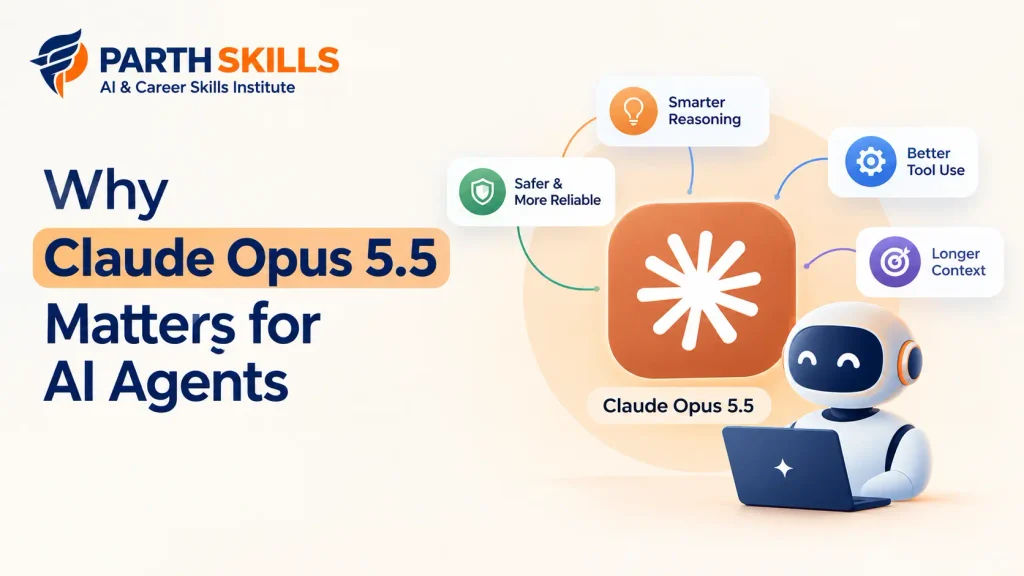
Anthropic has focused heavily on reducing the number of steps and tokens required for agents to finish complicated jobs.
In one Anthropic-reported enterprise example, an early tester allowed Opus 5.5 to work autonomously for more than 18 hours across six repositories.
Another reported test reduced a complicated coding workflow from 38 prompts over four days to 11 prompts over three hours.
Other early testers reported reductions of roughly 40–50% in turns, time or output-token usage for some agentic coding workloads compared with Opus 5.
These examples are company-selected customer reports rather than standardized benchmark results, but they highlight a significant AI-industry trend: efficiency is increasingly measured by the number of steps required to finish an entire job, not just token price.
Knowledge Work: Argon vs Astra vs Opus 5.5
Enterprise knowledge work is one of the clearest strengths of Gemini 4 Argon in Google’s published evaluation.
On the Vals Index:
Gemini 4 Argon scores 68.9%, Claude Opus 5.5 scores 67.0%, and GPT-6 Astra scores 63.1%.
On AutomationBench:
Argon reaches 51.3%, Opus 5.5 reaches 42.5%, and Astra reaches 41.4%.
On Vals Finance Agent v2:
Argon scores 65.4%, Opus 5.5 58.6%, and Astra 53.5%.
The Vals Index result has also been independently reported with Gemini 4 Argon at 68.9, Claude Opus 5.5 at 67.0 and GPT-6 Astra Max at 63.1.
This makes enterprise knowledge work one of the strongest early arguments for Argon.
Coding: Which Model Is Better?
Coding results are much more mixed.
Gemini 4 Argon leads DeepSWE v1.1 at 77.9%, narrowly ahead of Claude Opus 5.5 at 74.2% and GPT-6 Astra at 74.1%.
However, Astra leads Argon on FrontierSWE v2 by a significant margin: 65.5% versus 55.0%.
Claude Opus 5.5 leads Terminal-Bench 4.0 with 66.4%, ahead of Astra at 58.2% and Argon at 57.4%.
Opus 5.5 also leads PostTrainBench at 49.3%.
Therefore, asking “Which model is best for coding?” is too broad.
For repository-scale software engineering, Argon’s DeepSWE result is impressive.
For harder FrontierSWE tasks, Astra leads.
For terminal-heavy autonomous coding and command-line agents, Opus 5.5 currently has the stronger published result.
Science and Math
Science is another category where there is no clean sweep.
GPT-6 Astra scores 68.1% on Terminal-Bench Science 0.1, ahead of Claude Opus 5.5 at 63.3% and Argon at 57.6%.
However, Gemini 4 Argon leads LABBench 2 with 88.8%, compared with Astra at 85.4% and Opus 5.5 at 73.1%.
Argon also leads RiemannBench at 76.0%, versus 72.0% for Astra and 69.6% for Opus 5.5.
Astra therefore appears particularly strong when scientific reasoning must be performed through terminal and software tools, while Argon performs very strongly on some other scientific and mathematical evaluations.
Long-Context Reasoning
The three companies are converging around approximately million-token-scale context capabilities, but raw context size is becoming less meaningful by itself.
The more useful question is whether a model can actually retrieve, connect and reason over information dispersed across that context.
Google reports Argon at 99.7% on GraphWalks up to 128K and 84.2% from 256K to 1M.
The same comparison gives Astra 98.7% and 71.8%, while Claude Opus 5.5 scores 90.6% and 66.8%.
Argon therefore shows a particularly strong early result on this form of long-context reasoning.
Multimodal Understanding
Multimodal intelligence matters because real business information is not stored only in plain text.
AI systems increasingly need to understand screenshots, diagrams, PDFs, charts, presentations, videos and mixed-media documents.
On Chartography, Google reports:
Gemini 4 Argon: 71.6%
GPT-6 Astra: 71.0%
Claude Opus 5.5: 66.3%
On LVBench, which tests long-video understanding:
Gemini 4 Argon: 91.7%
GPT-6 Astra: 87.5%
Claude Opus 5.5: 83.7%.
Argon currently has the strongest published numbers of these three on both tests.
Cybersecurity
Frontier AI models are becoming dramatically more capable at cybersecurity, which is also one reason model releases are receiving stronger safeguards.
On CWE-bench v1, Gemini 4 Argon and GPT-6 Astra both score 68%, with Claude Opus 5.5 close behind at 67%.
Google says Argon can autonomously identify, validate and patch critical software vulnerabilities. Its internal vulnerability testing involved codebases spanning 20 programming languages.
OpenAI separately says Astra has reached its Critical cybersecurity-capability threshold.
Anthropic says Opus 5.5 includes additional protections such as action screening, sandboxing and stronger defenses against prompt-injection attacks.
The result is an important 2026 trend: cybersecurity is no longer a secondary benchmark category for frontier models. It is becoming one of the main factors determining how models are released.
Pricing: Gemini 4 Argon vs GPT-6 Astra vs Claude Opus 5.5
Pricing produces one of the largest differences among the three models.
| Model | Input / 1M Tokens | Output / 1M Tokens |
|---|---|---|
| Gemini 4 Argon – introductory | $2 | $10 |
| Gemini 4 Argon – post-introductory | $4 | $20 |
| GPT-6 Astra | $10 | $50 |
| Claude Opus 5.5 | $4 | $20 |
Google says the $2/$10 Argon rate is introductory. After that period, pricing is scheduled to increase to $4 per million input tokens and $20 per million output tokens.
GPT-6 Astra’s standard API pricing is $10/$50, while Claude Opus 5.5 is $4/$20.
That means Claude Opus 5.5’s base token rates are 60% lower than Astra’s for both input and output.
Argon’s future standard rates are scheduled to match Opus 5.5.
During its introductory period, Argon is half that price again.
Example API Cost at Scale
Consider a workload consuming 10 million input tokens and generating 2 million output tokens.
| Model | Approximate Token Cost |
|---|---|
| Gemini 4 Argon introductory pricing | $40 |
| Gemini 4 Argon future standard pricing | $80 |
| Claude Opus 5.5 | $80 |
| GPT-6 Astra | $200 |
This simplified example excludes caching, tool-use charges, fast modes and other platform-specific fees.
It demonstrates why the AI-model competition is increasingly about economics as much as raw intelligence.
A model that needs fewer reasoning tokens or fewer agent steps can also be cheaper in practice even when its published per-token price is higher.
Independent Price-to-Performance Results
Artificial Analysis provides an interesting example of that problem.
At the tested settings, it currently reports approximately:
Gemini 4 Argon High: 53 Intelligence Index, $1.99 average cost per Intelligence Index task
GPT-6 Astra Max: 53, $3.26 per task
Claude Opus 5.5 Max: 58, $5.98 per task.
But effort settings matter considerably.
Claude Opus 5.5 at medium effort scores 51 in the same independent testing while costing approximately $1.34 per task, demonstrating why comparing only maximum-effort results can be misleading for production deployments.
Businesses therefore need to evaluate quality per completed task, not only price per million tokens.
Availability May Matter More Than Benchmarks
This is the biggest practical limitation in any Gemini 4 Argon comparison today.
As of October 3, 2026, Argon is not yet a normal public self-service model for everyone.
Google is starting with trusted cyber defenders through Fairwind and says broader access will later begin with paid API customers and Google AI Ultra subscribers.
GPT-6 Astra is already documented for the OpenAI API and is being deployed across ChatGPT and enterprise channels, with OpenAI also listing Azure and Amazon Bedrock distribution.
Claude Opus 5.5 is available through Claude and the Claude API, along with Amazon Bedrock, Google Cloud and Microsoft Foundry.
Therefore, a model that scores higher on a benchmark may still be irrelevant for a business if the business cannot deploy it yet.
Which Model Is Best for Businesses?
For businesses, choosing between Gemini 4 Argon, GPT-6 Astra and Claude Opus 5.5 should depend on the workload rather than the company name.
| Business Requirement | Strong Candidate |
|---|---|
| Enterprise research and complex document analysis | Gemini 4 Argon / Claude Opus 5.5 |
| Long-context workflows | Gemini 4 Argon |
| Browser and computer automation | GPT-6 Astra |
| Long-running coding agents | Claude Opus 5.5 |
| Terminal-based engineering | Claude Opus 5.5 |
| Scientific terminal workflows | GPT-6 Astra |
| Multimodal and long-video analysis | Gemini 4 Argon |
| Finance research | Gemini 4 Argon / Claude Opus 5.5 |
| Cybersecurity defense | Gemini 4 Argon / GPT-6 Astra |
| Lower standard API token cost | Claude Opus 5.5 / future Argon pricing |
| Lowest introductory frontier pricing | Gemini 4 Argon |
| Deployable API today | GPT-6 Astra / Claude Opus 5.5 |
These are workload-based conclusions from currently published evidence, not guarantees that one model will perform better on every prompt.
Which Is Better for Digital Marketing and SEO?
For digital marketers, SEO professionals and agencies, the differences are more practical than benchmark numbers suggest.
Gemini 4 Argon could become particularly valuable for processing extremely large research sets, analyzing multimodal material, working across large collections of pages and running long research workflows.
GPT-6 Astra is attractive where the AI agent must actively use browsers, software and web interfaces rather than simply generate content.
Claude Opus 5.5 is especially interesting for long-form analysis, coding, structured business work and agents that must continue complex projects over many steps.
For SEO, AEO and GEO workflows, model quality should be tested on tasks such as entity research, search-intent classification, content-gap analysis, structured-data generation, internal-link mapping, technical SEO audits and citation-grounded research rather than generic chatbot questions.
What This Means for AI Automation
The biggest change visible across all three models is that the frontier-model competition is shifting from AI chat to AI work.
Earlier generations were judged largely on whether they could answer a difficult question.
The 2026 generation is increasingly judged on whether it can:
understand the objective, plan a workflow, use multiple tools, browse information, operate software, write and test code, recover from errors, verify its own results and continue working for hours with limited human intervention.
That is why benchmarks such as AutomationBench, Terminal-Bench, OSWorld and Agent’s Last Exam now matter so much.
The future AI assistant is becoming less like a chatbot and more like a digital worker.
Seven Major AI Trends Visible From These Models
The comparison reveals a broader change taking place across frontier AI.
- AI agents are replacing chatbot-only thinking. The important question is increasingly whether a model can finish an entire workflow.
- Million-token context is becoming normal at the frontier. Context capacity alone will therefore stop being a major differentiator; retrieval quality and long-context reasoning will matter more.
- Reasoning effort is becoming configurable. Businesses can trade intelligence against speed and cost rather than using one fixed model setting.
- Token efficiency is becoming as important as token price. A model that finishes a task in half as many steps can outperform a cheaper model economically.
- Computer use is becoming a core AI capability. Browser automation and desktop interaction are moving closer to mainstream enterprise deployment.
- Cybersecurity capabilities are forcing staged releases. More capable models can help defenders but also create new misuse risks.
- One-model strategies may disappear. Businesses are likely to route different tasks between multiple AI models based on complexity, cost, latency and tool requirements.
Will One AI Model Eventually Dominate?
Probably not in the near term.
The current evidence points toward a multi-model market.
An organization could use a low-cost model for routine classification, another model for coding, another for computer automation and a frontier reasoning model only when the workflow becomes sufficiently complex.
Model-routing systems can automatically decide when a task should be escalated.
This architecture could reduce AI costs substantially because expensive maximum-effort reasoning would be reserved for tasks that actually require it.
The result is that the most important question for businesses may eventually become not “Which AI model should we use?” but “Which model should handle each stage of this workflow?”
Gemini 4 Argon vs GPT-6 Astra vs Claude Opus 5.5: Final Comparison
As of October 3, 2026, these three models represent different strengths rather than one clear universal winner.
Gemini 4 Argon has the strongest showing across many of Google’s published enterprise, long-context and multimodal benchmarks. Its introductory $2/$10 pricing is extremely aggressive, and Google’s 1M-output-token design points toward unusually long autonomous workflows. Its main disadvantage today is simple: broad public availability has not arrived yet.
GPT-6 Astra remains one of the strongest options for computer use, scientific agent workflows, cybersecurity and complex autonomous work. It also has a mature deployment path through OpenAI’s API and broader ecosystem. Its biggest disadvantage is price: standard API token rates are substantially higher than Argon’s announced rates and Claude Opus 5.5.
Claude Opus 5.5 currently has the highest independent Artificial Analysis Intelligence Index result of these three at maximum effort, while also showing strong terminal-based coding, professional-work and long-running-agent performance. Its $4/$20 standard API pricing makes it considerably cheaper per token than Astra.
For developers and enterprises, the most sensible approach is therefore to evaluate the models on their actual workloads rather than choosing from benchmark headlines alone.
The frontier AI race is no longer about producing the smartest answer.
It is becoming a competition to determine which system can reliably complete the most valuable real-world work at the lowest total cost and with the least human supervision.
Frequently Asked Questions
Is Gemini 4 Argon better than GPT-6 Astra?
Gemini 4 Argon leads GPT-6 Astra on many of Google’s published benchmarks, including Vals Index, AutomationBench, DeepSWE, long-context GraphWalks and LVBench. Astra performs better on important tests including FrontierSWE v2, Terminal-Bench Science 0.1 and OSWorld 2.0. Independent Artificial Analysis currently gives both Argon High and Astra Max an Intelligence Index score of 53.
Is Gemini 4 Argon better than Claude Opus 5.5?
It depends on the workload. Argon leads many Google-published knowledge-work, long-context and multimodal tests. Claude Opus 5.5 leads Terminal-Bench 4.0 and PostTrainBench in Google’s comparison and currently scores higher on Artificial Analysis’s independent composite Intelligence Index at maximum effort.
Is Claude Opus 5.5 better than GPT-6 Astra?
Claude Opus 5.5 currently scores higher on Artificial Analysis’s Intelligence Index at maximum effort, while Astra has important strengths in computer use, scientific terminal workflows and some cybersecurity evaluations. The better model depends on the specific task.
Which AI model is best for coding in 2026?
There is no single coding winner. Argon leads DeepSWE v1.1, Astra leads FrontierSWE v2 among these three, and Claude Opus 5.5 leads Terminal-Bench 4.0 and PostTrainBench in Google’s published comparison.
Which model is best for AI agents?
GPT-6 Astra, Gemini 4 Argon and Claude Opus 5.5 are all designed for agentic workflows. Astra is especially strong in computer use, Opus 5.5 in long-running coding and terminal agents, and Argon in long-context enterprise workflows and automation benchmarks.
Which model has the largest context window?
GPT-6 Astra officially supports a 1.05M-token context window, while Claude Opus 5.5 supports 1M tokens. Independent testing lists Gemini 4 Argon at approximately 1M context, while Google separately advertises a maximum output capacity of up to 1M tokens.
How much does Gemini 4 Argon cost?
Google announced introductory pricing of $2 per million input tokens and $10 per million output tokens. After the introductory period, Google says pricing will increase to $4 input and $20 output per million tokens.
How much does GPT-6 Astra cost?
OpenAI lists GPT-6 Astra at $10 per million standard input tokens and $50 per million output tokens. Cached input is priced separately.
How much does Claude Opus 5.5 cost?
Claude Opus 5.5 costs $4 per million input tokens and $20 per million output tokens through Anthropic’s standard API pricing.
Is Gemini 4 Argon available to everyone?
Not yet. As of October 3, 2026, Google is beginning the rollout with trusted cybersecurity defenders through its Fairwind Program. Google says broader availability will follow, starting with paid API customers and Google AI Ultra subscribers.
Which model is the smartest AI in 2026?
“Smartest” depends on the evaluation. In the comparison covered here, Claude Opus 5.5 Max currently scores 58 on the independent Artificial Analysis Intelligence Index, while Gemini 4 Argon High and GPT-6 Astra Max score 53. Google’s own broader benchmark table, however, shows Argon leading most of the published rows.
What is the biggest AI trend for 2027?
The strongest direction is toward autonomous, long-running AI agents that can use software, browse, code, research and complete end-to-end business workflows. Context size, reasoning effort, tool use, cost per completed task and agent reliability are likely to matter more than simple chatbot benchmark scores.